
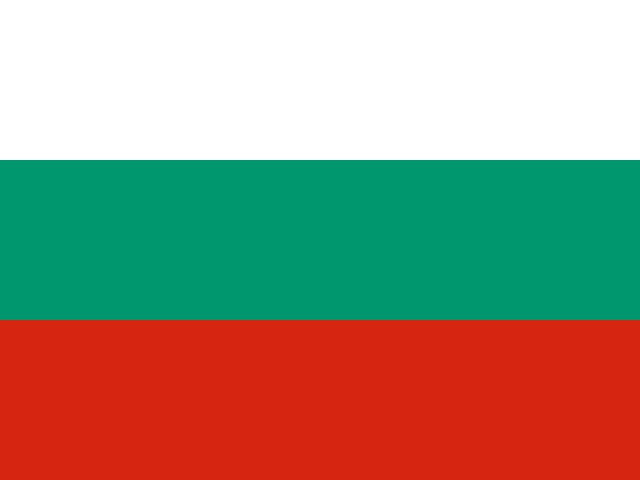
Bulgaria Bulgaria Visa and Residence Permit Guide for Foreign Nationals
- Capital
- Sofia
- Currency
- BGN
- Languages
- Bulgarian
- Official fee
- from 210 BGN
Bulgaria is an EU member state and joined the Schengen Area fully (land borders) on 1 January 2025. Non-EU nationals enter long-stay immigration routes via a Type D long-stay visa obtained at a Bulgarian embassy/consulate, followed by a residence permit issued by the Migration Directorate of the Ministry of Interior. Continuous (temporary) residence is typically issued for up to one year and renewable; after five years of legal residence a person may qualify for long-term/permanent residence, and after five years of permanent/long-term residence (three if married to a Bulgarian) for citizenship by naturalisation, which also requires Bulgarian language proficiency.

Immigration Pathways
(8) Last updated: Jun 19, 2026 3 months agoNo pathways match your search.
Non-EU nationals employed by a Bulgarian employer obtain a single permit (combined work and residence authorisation) or a work permit, after the employer demonstrates a labour market test, then a Type D visa and residence permit.
- Processing time
- Permit decision typically within about 2 months (extendable to 4 in complex cases); Type D visa up to ~35 working days
- Validity
- Single/work permit valid up to 1 year, renewable up to 3 years total
- Language requirement
- No language requirement for the work permit itself; Bulgarian required for later naturalisation
- Documents
- 7 required
- Permanent residence
- Yes · Eligible for long-term/permanent residence after 5 years of legal residence
- Citizenship
- Yes · Naturalisation generally after 5 years of permanent/long-term residence

The EU Blue Card lets highly qualified non-EU professionals work in Bulgaria; no labour market test applies and the salary threshold is among the lowest in the EU.
- Processing time
- Maximum 3 months (express options of 10 or 3 working days available for a fee)
- Validity
- Up to 5 years (minimum 24 months; or contract duration + 3 months)
- Language requirement
- No language requirement for the Blue Card; Bulgarian required for later naturalisation
- Documents
- 6 required
- Permanent residence
- Yes · Long-term residence after 5 years (Blue Card periods in EU states can count)
- Citizenship
- Yes · Naturalisation generally after 5 years of permanent/long-term residence

Non-EU students enrolled full-time at an accredited Bulgarian higher education institution obtain a Type D study visa and a study residence permit.
- Processing time
- Type D visa issued within up to ~35 working days
- Validity
- Aligned to study programme; granted for max 1 year, renewable
- Language requirement
- Programme-dependent; many programmes offered in English. Bulgarian required for later naturalisation
- Documents
- 6 required
- Permanent residence
- Yes · Study years count partially; long-term residence generally after 5 years of legal residence

Non-EU nationals who wish to work as self-employed or freelance in Bulgaria must first obtain a self-employment permit from the Employment Agency, then a Type D visa, and finally a residence permit from the Migration Directorate. The applicant must demonstrate at least 2 years of professional experience in the relevant field and hold a B1 Bulgarian language certificate. The permit is valid for up to 1 year and is renewable up to a total of 3 years.
- Processing time
- Employment Agency permit decision: up to several weeks. Type D visa: approximately 35 working days. Residence permit: up to 14 days (extendable by one month).
- Validity
- Up to 1 year, renewable; maximum 3 years total. After 3 years, applicant must return to home country for at least 1 month before reapplying.
- Language requirement
- Bulgarian language proficiency at B1 level (certificate required).
- Documents
- 9 required
- Permanent residence
- Yes · Permanent residence available after 5 years of continuous legal residence (not exclusively through this permit; standard long-term residence track applies).
- Citizenship
- Yes · Citizenship by naturalisation available after 5 years of permanent or long-term residence, subject to language and other requirements.

Bulgaria's Golden Visa grants permanent residence to non-EU nationals who invest a minimum of EUR 512,000 in a regulated Alternative Investment Fund (AIF) or Exchange-Traded Fund (ETF) licensed by Bulgaria's Financial Supervision Commission. The investment must be maintained for at least 5 years. There is no minimum residency requirement. Processing typically takes 6 to 8 months. The direct real estate investment route was abolished in 2025 and is no longer available. The fast-track citizenship-by-investment programme was suspended in 2022 and is no longer available; citizenship requires standard naturalisation after 5 years of residence.
- Processing time
- Varies; confirm with the Migration Directorate
- Validity
- Permanent residence (long-validity permit, renewable)
- Language requirement
- No language requirement for residence; Bulgarian required for later naturalisation
- Documents
- 4 required
- Permanent residence
- Yes · Immediate permanent residence upon qualifying investment
- Citizenship
- Yes · No fast-track citizenship route is available. The accelerated citizenship-by-investment programme was suspended in 2022. Citizenship requires standard naturalisation: 5 years of permanent/long-term residence, language proficiency, and other general criteria.

Non-EU residents holding a residence permit valid at least one year can sponsor a spouse and minor children for family reunification residence permits.
- Processing time
- Reunification approval ~1 month; Type D visa ~4-6 weeks; residence permit up to ~2 weeks
- Validity
- Tied to sponsor's permit, not more than 1 year, renewable
- Language requirement
- No language requirement for reunification; Bulgarian required for later naturalisation
- Documents
- 6 required
- Permanent residence
- Yes · Long-term residence generally after 5 years of legal residence
- Citizenship
- Yes · Spouse of a Bulgarian citizen: naturalisation after 3 years of residence; otherwise standard rules

After five years of continuous legal residence, non-EU nationals can obtain long-term resident (EU LTR) or permanent residence status.
- Processing time
- Varies; confirm with the Migration Directorate
- Validity
- Long-term residence card typically valid 5 years, renewable; status is settled
- Language requirement
- No language requirement for residence; Bulgarian required for later naturalisation
- Documents
- 6 required
- Permanent residence
- Yes · Status itself constitutes long-term/permanent residence after 5 years
- Citizenship
- Yes · Naturalisation generally after 5 years of permanent/long-term residence

After five years of permanent/long-term residence (three if married to a Bulgarian citizen), applicants meeting income, clean-record and Bulgarian-language requirements may apply for citizenship.
- Processing time
- Varies; typically a multi-year administrative process
- Validity
- Citizenship is permanent once granted
- Language requirement
- Bulgarian language proficiency required (Ministry of Education certificate; ~A1 level); waived if studied in Bulgaria
- Documents
- 5 required
- Permanent residence
- Yes
- Citizenship
- Yes · 5 years of permanent/long-term residence (3 years if married to a Bulgarian citizen)

Views of the country


Frequently asked questions
How do I get a Bulgarian long-stay visa?
For stays longer than 90 days, you need a Type D long-stay visa from a Bulgarian embassy or consulate. After arriving, you must apply for a residence permit with the Migration Directorate of the Ministry of Interior.
What is the EU Blue Card in Bulgaria?
The EU Blue Card is a residence permit for highly qualified non-EU employees. It follows the same Type D visa process and residence permit rules, typically issued for one year and renewable.
Can I bring my family to Bulgaria on a residence permit?
Yes, family reunification allows spouses and children of residence permit holders to join them. Family members apply for a Type D visa and then receive a residence permit like the main applicant.
How does Bulgaria's Schengen membership affect long-stay visas?
Bulgaria joined the Schengen Area fully on 1 January 2025. For long stays, you still need a Bulgarian Type D visa and residence permit; Schengen affects short stays and border-free movement.
What is the Golden Visa for Bulgaria?
The Bulgarian permanent residence by investment route is for non-EU nationals. You obtain a Type D visa and then apply for permanent residence through the Migration Directorate based on a qualifying investment.
How can I become a Bulgarian citizen?
After five years of permanent or long-term residence in Bulgaria, you can apply for citizenship by naturalisation. This period is three years if you are married to a Bulgarian citizen, and you must prove Bulgarian language proficiency.
Bulgaria in comparison
Side by side with each country in the same group - documented routes, official government fees and the way to permanent residence.
 Austria
 Belgium
 Switzerland
 Cyprus
 Czech Republic
 Germany
 Denmark
 Estonia
 Spain
Spain
 Finland
 France
 Greece
 Croatia
 Hungary
 Ireland
 Iceland
 Italy
Italy
 Liechtenstein
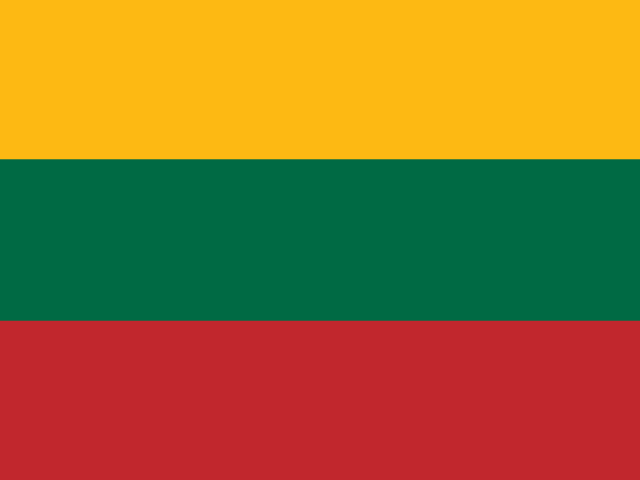 Lithuania
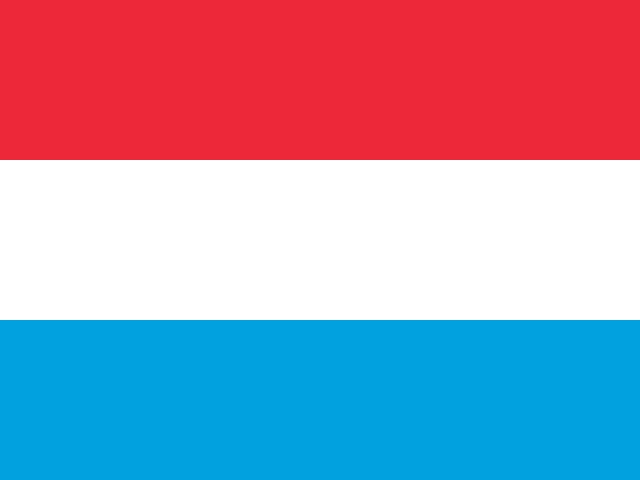 Luxembourg
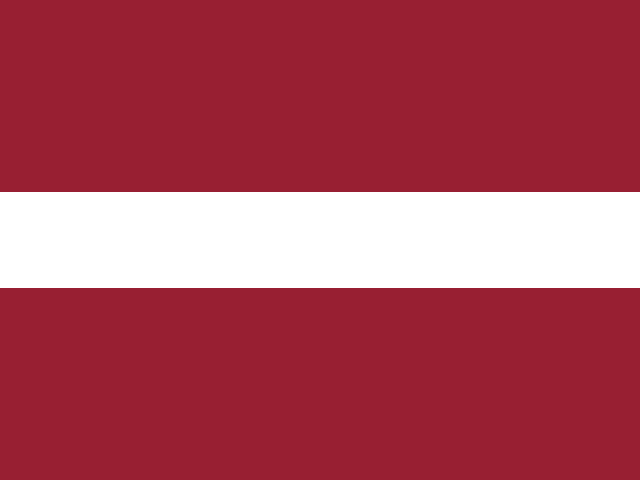 Latvia
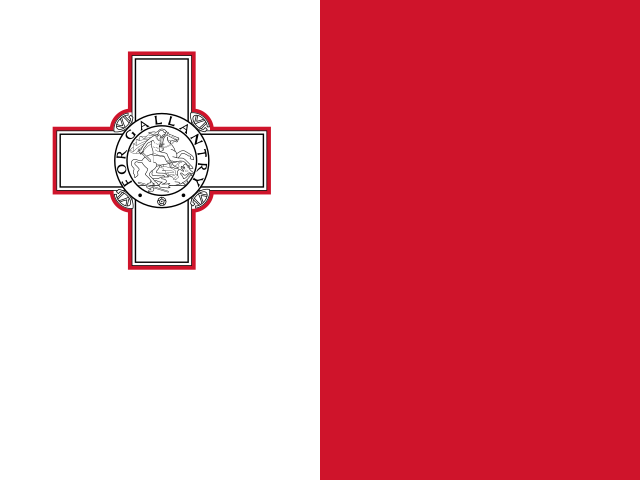 Malta
Malta
 Netherlands
 Norway
 Poland
 Portugal
 Romania
 Sweden
 Slovenia
 Slovakia